🌟 GUI-Summary (贵 / 规 …)
ENGLISH
GUI is a large, multi-domain, high-frequency syllable family.
Its meanings span:
-
return
-
rules / regulations
-
expensive / precious
-
ghosts / demons
-
turtles
-
noble / honored
-
to belong to
-
to avoid / evade
GUI has six major centers of meaning:
1️⃣ 归 guī — to return; belong to; go back
2️⃣ 规 guī — rule; regulation; compass
3️⃣ 贵 guì — expensive; precious; esteemed
4️⃣ 鬼 guǐ — ghost; spirit; clever; sneaky
5️⃣ 龟 guī — turtle; tortoise
6️⃣ 桂 guì — osmanthus tree; cinnamon
Secondary meanings:
7️⃣ 轨 guǐ — track; rail
8️⃣ 柜 guì / jǔ — cabinet; cupboard
9️⃣ 跪 guì — to kneel
🔟 诡 guǐ — tricky; deceitful
1️⃣1️⃣ 硅 guī — silicon (chemistry, tech)
1️⃣2️⃣ 瑰 guī — magnificent; precious
1️⃣3️⃣ 刽 guì — executioner (刽子手)
1️⃣4️⃣ 窐 / 溎 — rare characters, “sunken space”, etc.
DEUTSCH
GUI ist eine große, breit gefächerte, sehr wichtige Silbenfamilie.
Sie umfasst:
-
zurückkehren / gehören
-
Regeln / Normen
-
teuer / edel
-
Geister / Dämonen
-
Schildkröten
-
Osmanthus / Zimtbaum
-
Schienen / Gleise
-
Knien / Ehrbezeugung
Die sechs Kernzentren:
1️⃣ 归 guī — zurückkehren; gehören
2️⃣ 规 guī — Regel; Norm; Zirkel
3️⃣ 贵 guì — teuer; wertvoll; edel
4️⃣ 鬼 guǐ — Geist; schlau; heimlich
5️⃣ 龟 guī — Schildkröte
6️⃣ 桂 guì — Osmanthus; Zimt (桂皮)
Weitere Bedeutungen:
7️⃣ 轨 guǐ — Schiene; Spur
8️⃣ 柜 guì — Schrank; Tresen
9️⃣ 跪 guì — knien
🔟 诡 guǐ — unheimlich; listig
1️⃣1️⃣ 硅 guī — Silizium (Technik)
1️⃣2️⃣ 瑰 guī — prächtig

RETURN

EXPENSIVE
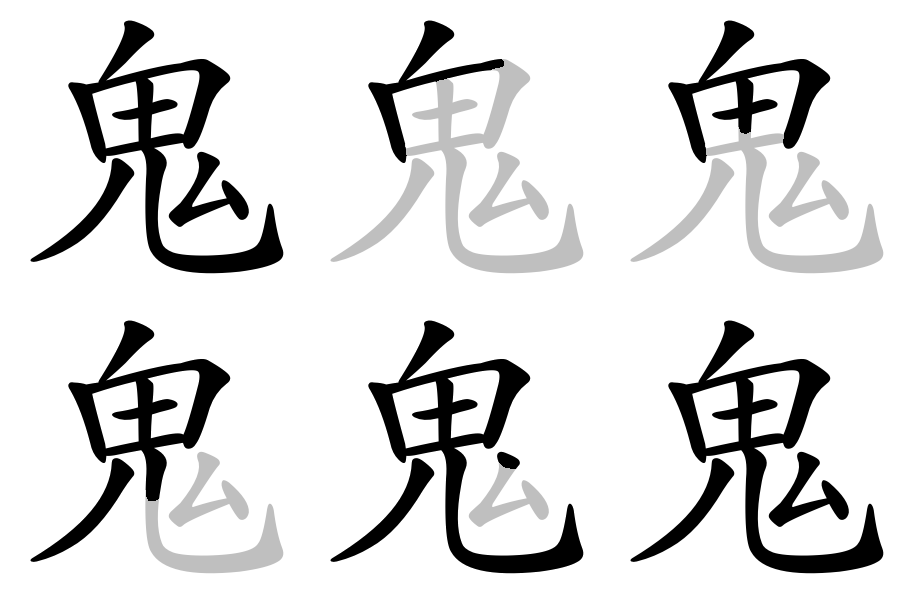
GHOST
🧩 1. CORE MEANING FIELDS — GUI (EN / DE)
| Hanzi | Pinyin | EN Meaning | DE Bedeutung | Notes |
|---|---|---|---|---|
| 归 | guī | return; belong to | zurückkehren; gehören | grammar core |
| 规 | guī | rule; regulate; compass | Regel; Norm; Zirkel | administrative |
| 贵 | guì | expensive; precious | teuer; wertvoll | common |
| 鬼 | guǐ | ghost; spirit; sneaky | Geist; schlau | basic word |
| 龟 | guī | turtle | Schildkröte | zoological |
| 桂 | guì | osmanthus; cinnamon | Osmanthus; Zimt | food/culture |
| 轨 | guǐ | track; rail | Schiene; Gleis | technical |
| 柜 | guì | cabinet; counter | Schrank; Tresen | daily life |
| 跪 | guì | kneel | knien | physical |
| 诡 | guǐ | cunning; weird | listig; unheimlich | literary |
| 硅 | guī | silicon | Silizium | chemistry/tech |
⭐ 2) GUI-CORE #1 — 归 guī (to return; belong)
Used in grammar, belonging, direction, final results.
Meaning groups:
-
return: 回归 huíguī — return
-
belong to: 归属 guīshǔ
-
be put under: 归档 guīdàng — archive
-
finally: 归根结底 guīgēn jiédǐ — “in the end”
| Word | Pinyin | EN | DE |
|---|---|---|---|
| 归来 | guīlái | return | zurückkommen |
| 归属 | guīshǔ | belong to | gehören zu |
| 归纳 | guīnà | summarize | zusammenfassen |
| 结局归你 | jiéjú guī nǐ | the ending is up to you | das Ende gehört dir |
Example
我终于归家了。
Wǒ zhōngyú guījiā le.
EN: I finally returned home.
DE: Ich bin endlich nach Hause zurückgekehrt.
⭐ 3) GUI-CORE #2 — 规 guī (rule; regulation)
Foundation of modern Chinese administrative & legal vocabulary.
| Word | Pinyin | EN | DE |
|---|---|---|---|
| 规则 | guīzé | rule | Regel |
| 规定 | guīdìng | regulation | Vorschrift |
| 规矩 | guīju | social rules | Benimmregeln |
| 规划 | guīhuà | plan; layout | planen; Planung |
Example
请遵守规定。
Qǐng zūnshǒu guīdìng.
EN: Please follow the regulations.
DE: Bitte halten Sie sich an die Vorschriften.
⭐ 4) GUI-CORE #3 — 贵 guì (expensive; precious; noble)
Also used in honorific language (“your…” = 贵).
| Word | Pinyin | EN | DE |
|---|---|---|---|
| 贵重 | guìzhòng | precious | wertvoll |
| 贵族 | guìzú | noble; aristocracy | Adel |
| 贵公司 | guì gōngsī | your company | Ihre Firma |
| 太贵了 | tài guì le | too expensive | zu teuer |
Example
这个太贵了!
Zhège tài guì le!
EN: This is too expensive!
DE: Das ist zu teuer!
⭐ 5) GUI-CORE #4 — 鬼 guǐ (ghost; phantom; sly person)
A fun, productive morpheme.
A) Literal ghosts
-
鬼魂 guǐhún — ghost
-
鬼屋 guǐwū — haunted house
B) Slang for clever / sneaky / naughty
-
小鬼 xiǎoguǐ — “little rascal”
-
鬼点子 guǐdiǎnzi — clever trick
-
鬼话 guǐhuà — nonsense; lie
C) Idioms
-
鬼使神差 — “strangely; by fate”
-
鬼混 — mess around
⭐ 6) GUI-CORE #5 — 龟 guī (turtle)
Includes the famous 乌龟 wūguī — tortoise.
| Word | Pinyin | EN | DE |
|---|---|---|---|
| 乌龟 | wūguī | turtle | Schildkröte |
| 海龟 | hǎiguī | sea turtle | Meeresschildkröte |
| 龟甲 | guījiǎ | tortoise shell | Schildkrötenpanzer |
⭐ 7) GUI-CORE #6 — 桂 guì (osmanthus; cinnamon)
Cultural + culinary.
| Word | Pinyin | EN | DE |
|---|---|---|---|
| 桂花 | guìhuā | osmanthus flower | Osmanthusblüte |
| 桂皮 | guìpí | cinnamon | Zimt |
| 桂林 | Guìlín | Guilin city | Guilin |
⭐ 8) High-frequency secondary items
轨 guǐ — rail / track
-
铁轨 tiěguǐ — railway track
-
轨道 guǐdào — orbit; track
柜 guì — cabinet / cupboard
-
柜台 guìtái — counter
-
橱柜 chúguì — cupboard
跪 guì — kneel
-
下跪 xiàguì — kneel down
诡 guǐ — weird / cunning
-
诡计 guǐjì — trick
-
诡异 guǐyì — eerie
硅 guī — silicon
-
硅谷 Guīgǔ — Silicon Valley
📊 MINI-COMPARISON TABLE — GUI
| Hanzi | Pinyin | English | Deutsch | Notes |
|---|---|---|---|---|
| 归 | guī | return | zurückkehren | grammar + direction |
| 规 | guī | rule | Regel | administrative |
| 贵 | guì | expensive | teuer; edel | common |
| 鬼 | guǐ | ghost; sly | Geist; schlau | basic slang |
| 龟 | guī | turtle | Schildkröte | zoology |
| 桂 | guì | osmanthus | Osmanthus; Zimt | culture |
| 轨 | guǐ | rail | Schiene | technical |
| 柜 | guì | cabinet | Schrank | home |
| 跪 | guì | kneel | knien | body action |
| 诡 | guǐ | cunning | listig | literary |
🗣 EXAMPLE SENTENCES (EN / DE + Pinyin)
归 guī — return
他终于归来了。
Tā zhōngyú guīlái le.
EN: He finally returned.
DE: Er ist endlich zurückgekommen.
规 guī — rule
这是学校的规定。
Zhè shì xuéxiào de guīdìng.
EN: These are the school rules.
DE: Das sind die Schulregeln.
贵 guì — expensive
这里的咖啡很贵。
Zhèlǐ de kāfēi hěn guì.
EN: The coffee here is expensive.
DE: Der Kaffee hier ist teuer.
鬼 guǐ — ghost / sly
你这个小鬼!
Nǐ zhège xiǎoguǐ!
EN: You little rascal!
DE: Du kleiner Schelm!
拐 guǎi (belonging to GUI family via 柺/variants)
前面右拐。
Qiánmiàn yòu guǎi.
EN: Turn right ahead.
DE: Da vorne rechts abbiegen.
轨 guǐ — rail
火车在轨道上。
Huǒchē zài guǐdào shàng.
EN: The train is on the track.
DE: Der Zug ist auf den Gleisen.
📚 Kurz-Zusammenfassung (EN / DE)
ENGLISH
GUI includes return (归), rules (规), expensive/noble (贵),
ghost (鬼), turtle (龟), osmanthus (桂),
plus rails (轨), cabinets (柜), kneeling (跪) and silicon (硅).
A large, powerful, essential Pinyin family.
DEUTSCH
GUI umfasst zurückkehren (归), Regeln (规), teuer/edel (贵),
Geister (鬼), Schildkröten (龟), Osmanthus/Zimt (桂)
sowie Schienen (轨), Schrank (柜), Knien (跪) und Silizium (硅).
Eine große, hochfrequente und äußerst wichtige Familie.
🔹 贵 (guì = expensive, honorable / teuer, geehrt)
Hanzi |
Pinyin |
EN |
DE |
HSK |
Häufigkeit |
CL |
Notes |
贵 |
guì |
expensive |
teuer |
HSK 2 |
sehr hoch (Alltag) |
– |
auch höflich „honorable“ |
贵姓 |
guìxìng |
(your) honorable surname |
Ihr werter Nachname |
HSK 3 |
mittel (höflich, formell) |
– |
Anrede: 请问您贵姓? |
贵公司 |
guì gōngsī |
your (honorable) company |
Ihre (werte) Firma |
– |
mittel (formell, geschäftlich) |
家 jiā |
Höflichkeitsformel |
贵宾 |
guìbīn |
honored guest, VIP |
Ehrengast |
– |
mittel-hoch |
位 wèi |
Hotels, Events |
贵重 |
guìzhòng |
valuable, precious |
wertvoll, kostbar |
HSK 6 |
mittel |
– |
Dinge, Geschenke |
🔹 规 (guī = rule, regulation / Regel, Norm)
Hanzi |
Pinyin |
EN |
DE |
HSK |
Häufigkeit |
CL |
Notes |
规定 |
guīdìng |
regulation, to stipulate |
Vorschrift, vorschreiben |
HSK 4 |
sehr hoch (offiziell, Alltag) |
条 tiáo |
Noun + Verb |
规范 |
guīfàn |
standard, norm; to standardize |
Norm, Standard; normieren |
HSK 6 |
mittel-hoch (formell) |
– |
Sprache, Verhalten, Verwaltung |
规律 |
guīlǜ |
law, regular pattern |
Gesetzmäßigkeit, Regel |
HSK 5 |
mittel |
个 gè |
Naturgesetze, Lernrhythmus |
规矩 |
guīju |
rule, custom |
Regel, Brauch |
– |
mittel (gesprochen) |
个 gè |
Umgang, Benimm |
规模 |
guīmó |
scale, scope |
Umfang, Maßstab |
HSK 5 |
mittel-hoch |
个 gè |
Unternehmen, Projekte |
📊 Ranking nach Alltagshäufigkeit
Sehr häufig (HSK-Basis, Alltag):
-
贵 (guì – expensive / teuer)
-
规定 (guīdìng – rule, to stipulate / Vorschrift)
Häufig (gehobene, aber gebräuchliche Sprache):
-
贵姓 (guìxìng – your honorable surname / werter Nachname)
-
贵重 (guìzhòng – valuable / kostbar)
-
规律 (guīlǜ – regular pattern / Gesetzmäßigkeit)
-
规模 (guīmó – scale / Maßstab)
Mittel (eher formell, weniger umgangssprachlich):
-
贵宾 (guìbīn – honored guest / Ehrengast)
-
规范 (guīfàn – norm / Norm, Standard)
-
规矩 (guīju – custom / Brauch, Benimm)
-
贵公司 (guì gōngsī – your honorable company / Ihre Firma)
🔑 Zusammenfassung EN / DE
-
贵 (guì) = expensive, costly, also polite „honorable“ → teuer, geehrt.
👉 Alltag: 贵 = teuer. Höflichkeit: 贵姓, 贵公司, 贵宾.
-
规 (guī) = rule, norm, regulation → Regel, Vorschrift, Norm.
👉 Wortfelder: 规定 (rule, stipulate), 规范 (standardize), 规律 (regularity), 规模 (scale), 规矩 (custom).
-
Kultur-Aspekt:
– 贵 oft doppeldeutig: materiell (Preis) vs. sozial (Respekt).
– 规 steht fast immer für Ordnung, Standardisierung, Regeln (Sprache, Verhalten, Verwaltung).
#️⃣ #3272 – 规定 (guīdìng = regulation, to stipulate / Vorschrift, vorschreiben)
-
#️⃣ #3272 – 规定 (guīdìng = regulation, to stipulate / Vorschrift, vorschreiben)
➡️ Sentence type: #1 Declarative sentence (陈述句, Regelangabe / regulation statement)
-
🔡 Pinyin (aufgesplittet)
⬛ 👤 Gōngsī (gōng – sī – the company / die Firma)
🟥🟦 📘 yǒu hěn duō guīdìng (yǒu – hěn – duō – guī – dìng – has many regulations / hat viele Vorschriften)
🟦🟦 😀 yuángōng bìxū zūnshǒu (yuán – gōng – bì – xū – zūn – shǒu – employees must obey / die Angestellten müssen sie einhalten)
-
🈷 Hanzi (aufgesplittet)
⬛ 👤 公司 (Gōngsī)
🟥🟦 📘 有很多规定 (yǒu hěn duō guīdìng)
🟦🟦 😀 员工必须遵守 (yuángōng bìxū zūnshǒu)
-
🅴 English
Real translation: The company has many regulations, and employees must follow them.
Literal: Company has many regulations, employees must obey.
⬛ 👤 company (gōngsī)🟥🟦 📘 regulation (guīdìng)
🟦🟦 😀 must obey (bìxū zūnshǒu)
-
🅳 Deutsch
Reale Übersetzung: Die Firma hat viele Vorschriften, und die Angestellten müssen sie einhalten.
Wörtlich: Firma hat viele Vorschriften, Angestellte müssen befolgen.
⬛ 👤 Firma (gōngsī)
🟥🟦 📘 Vorschrift (guīdìng)
🟦🟦 😀 müssen befolgen (bìxū zūnshǒu)
-
📚 Grammar (EN / DE)
规定 (guīdìng) = regulation, rule; to stipulate / Vorschrift, festlegen.
• Als Nomen: „Regel, Vorschrift“.
• Als Verb: „festlegen, vorschreiben“.
→ 官方/administrativ, in Verträgen, Firmen, Schule, Politik.
-
Collocations / Kollokationen:
公司规定 – company regulations / Firmenvorschriften
• 法律规定 – legal stipulation / gesetzliche Vorschrift
• 严格规定 – strict regulation / strenge Vorschrift
• 按规定 – according to regulations / gemäß Vorschrift
• 规定时间 – fixed time / festgelegte Zeit
-
🔁 Legend (nach Mastertabelle, Zeichen für Zeichen)
Symbol |
Hanzi |
Pinyin (vertical) |
English / Deutsch |
Wortart (Mastertabelle) |
⬛ 👤 |
公
|
gōng
|
company / Firma |
Noun – Organization (🏢) |
🟥🟦 📘 |
规
|
guī
|
regulation / Vorschrift |
Noun + Verb – Rule (📘) |
🟦🟦 😀 |
必
|
bì
|
must obey / müssen befolgen |
Verb – Obligation (⚖️) |
#️⃣ #3273 – 规范 (guīfàn = standard, norm; to standardize / Norm, Standard; normieren, regeln)
#️⃣ #3273 – 规范 (guīfàn = standard, norm; to standardize / Norm, Standard; normieren, regeln)
➡️ Sentence type: #1 Declarative sentence (陈述句, Beschreibung / descriptive statement)
🔡 Pinyin (aufgesplittet)
⬛ 👤 Zhè zhǒng xíguàn (zhè – zhǒng – xí – guàn – this habit / diese Gewohnheit)
🟥🟦 📘 bù tài guīfàn (bù – tài – guī – fàn – is not very standard / ist nicht sehr normgerecht)
🟦🟦 😀 xūyào gǎi jìn (xū – yào – gǎi – jìn – needs improvement / muss verbessert werden)
🈷 Hanzi (aufgesplittet)
⬛ 👤 这种习惯 (Zhè zhǒng xíguàn)
🟥🟦 📘 不太规范 (bù tài guīfàn)
🟦🟦 😀 需要改进 (xūyào gǎijìn)
🅴 English
Real translation: This habit is not very standard and needs improvement.
Literal: This kind habit not very standard, need improve.
⬛ 👤 this habit (zhè zhǒng xíguàn)
🟥🟦 📘 not very standard (bù tài guīfàn)
🟦🟦 😀 needs improvement (xūyào gǎijìn)
🅳 Deutsch
Reale Übersetzung: Diese Gewohnheit ist nicht sehr normgerecht und muss verbessert werden.
Wörtlich: Diese Art Gewohnheit nicht sehr Standard, braucht Verbesserung.
⬛ 👤 diese Gewohnheit (zhè zhǒng xíguàn)
🟥🟦 📘 nicht sehr normgerecht (bù tài guīfàn)
🟦🟦 😀 muss verbessert werden (xūyào gǎijìn)
📚 Grammar (EN / DE)
• 规范 (guīfàn) = standard, regulation / Norm, Standard.
• Als Substantiv: the norm / die Norm.
• Als Adjektiv: standard, regulated / normgerecht.
• Als Verb: to standardize, regulate / normieren, regeln.
Collocations / Kollokationen:
• 行为规范 (xíngwéi guīfàn) – code of conduct / Verhaltenskodex
• 语言规范 (yǔyán guīfàn) – language norm / Sprachstandard
• 规范操作 (guīfàn cāozuò) – standardized operation / standardisierte Durchführung
• 法律规范 (fǎlǜ guīfàn) – legal norms / Rechtsnormen
• 规范管理 (guīfàn guǎnlǐ) – standardized management / standardisierte Verwaltung
🔁 Legend (nach Mastertabelle, Zeichen für Zeichen)
Symbol |
Hanzi |
Pinyin (vertical) |
English / Deutsch |
Wortart (Mastertabelle) |
⬛ 👤 |
这
|
zhè
|
this habit / diese Gewohnheit |
Noun – Abstract (📦) |
🟥🟦 📘 |
规
|
guī
|
standard / Norm |
Adjective / Noun – Quality (📘) |
🟦🟦 😀 |
改
|
gǎi
|
improve / verbessern |
Verb – Action (🧭) |